Friday, January 28, 2022

Significance of Vasant Panchami


Maa Saraswati has been extolled in several scriptures, Ved and Purans. We often hear that Lakshmi and Saraswati are “rivals” and how one is superior than the other. However, the truth is that Lakshmi is Chanchala (impermanent,always moving) and it is only with Maa Saraswati’s blessings that one can gain the wisdom and knowledge to preserve Lakshmi (wealth here) in their life.

Hence, one should make an effort to understand the deeper secrets behind Maa Saraswati from a learned Guru. We all aspire to be successful in life but success depends on several factors such as our Karmas. Our karmas are influenced by 3 main qualities, Sattva,Rajas and Tamas gunas. Our Shastras say “Tamso Ma Jyotirgamaya”, i.e Lead me from Darkness to light and this is only possible with the blessings of Maa Saraswati.

One of the key elements in attaining success is how we make an impact on others and inspire them. We express our personalities to the outer world through our thoughts and speech. Our thoughts are expressed through words and it is our ability to communicate with others that determine the level of impact we make on them. Our words and the manner in which we interact with others is a key element in determining how we inspire them and become successful in life. Maa Saraswati’s blessings give one mastery over speech and communication. With her blessings, our speech and words can produce the desired effect on the world and inspire others.

Most of the successful leaders have one trait in common which is their ability to speak and convince others. We see politicians who are great orators inspiring millions of people worldwide. Similarly, a   singer can entrall an audience and evoke emotions of ecstasy, sorrow, melody all at the same time through the power of speech and words. Such is the power of Maa Saraswati’s blessing.

Even sounds produce effects and different types of sound produce different effect. A crying sound has a different effect as compared to laughter. With the help of words, sound and mantra sadhnas, we can please or attract deities to give us desired results. Hence, we need the grace of Maa Saraswati if we want success in life. All the 10 mahavidyas have some element of Maa Saraswati in them and the highest category of tantriks or Mahavidya sadhaks will always have Saraswati siddhis.

Vasant Panchami is a very powerful occasion and personally I have learnt several sadhanas on Maa Saraswati under the tutelage of my gurudev, Swami Nikhileshwaranandji. As per my Guruji, the meaning of Vasant is “Bas- Ant(a)”, meaning end of all sorrows, miseries, problems and difficulties in life. Vasant Panchami heralds the arrival of spring season, symbolizing growth, prosperity, renewal from the dry, cold winters, new beginnings and regeneration. A true sadhak should use this day to discard all shortcomings in their lives and start afresh.

Vasant Panchami is the day of knowledge, wisdom, literature, arts and music. On this day, people also worship Kamadeva and Rati who awaken the earth (and its people) and thus the world blooms anew. Hence, it is an auspicious day for Akarshan (attraction) siddhi sadhnas. It is also the day for Apasara,Brahma and Lakshmi Siddhi. Performing sadhnas on this auspicious day is very beneficial for those looking to get married, married couples who are either on the verge of divorce or looking for renewed marital bliss in their relationships. In short, it is a very auspicious day for practicing sadhnas and opening doors for new opportunities in life.


Saturday, February 20, 2021

Understanding the essence of Ma Saraswati through Guruji's discourses


Out of the 3 divine shaktis, while Kali represents Kriya shakti (energy related to action), Lakshmi represents Icchhya shakti (energy related to will power), Saraswati represents Gyana shakti (energy related to knowledge or wisdom).

Without gyana shakti kindled within us, we cannot make progress in the world, spiritual or material. 

That Gyana comes from blessings of Saraswati. Her root mantra Aim or Aeng also represents the root mantra associated with our soul (Atma Beeja). 

Atma kripa (kripa meaning grace) is the 4th and final stage of kripa. Shastra kripa (blessings from scriptures, the first stage) is followed by Ishta kripa (blessings from Ishta devata, the deity you associate with), which leads to Guru kripa (Guru, the form of Parabrahman the immortal). After one becomes worthy of Guru's blessings (requires very long penance), Guru clears the path for Atma kripa, through which you merge your Atma (soul) into the ParamAtma (the all pervading super-soul of Parabrahman). Your final effort, that leap, is Atma kripa, which is only possible by constant flow of Gyana within our consciousness. 

That Gyana is pure just like a river coming from Himalayas, naturally flowing and is healing and cleansing. The word Saras means "flowing". Guru's knowledge transferred into our consciousness is Saraswati, which awakens our kundalini. Saraswati and her beeja mantra are directly connected with Kundalini jagaran.

When our consciousness starts traversing from the gross states to subtle states, i.e. from Annamaya kosha (physical body) to Manamaya kosha (mental realm) to Pranamaya kosha (breath and life force), then we are ready to enter the Vigyana maya kosha (scientific state, that quest for divine knowledge where tantra actually begins), and culminates into the final state of Anandamaya kosha (The state of union, where Shakti meets Shiva). 

This is the culmination of our spiritual journey where kundalini rises from the gross muladhara (earth, Lam), and enters other bhootas (water, fire, air) and merges into the Akash (ether) element which is all pervasive.

This journey is only possible by the grace of Guru who invokes the shakti of Saraswati within us. That gyana shakti also gives us wisdom so we can use the other 2 shaktis (energy of will and action). Only when we have wisdom, we can work according to divine will and use our actions to do meaningful work.

That gyana also provides us light so we can understand our Dharma. "Kula dharma prakashaya tasmai Shree Gurave Namaha". Dharma sums up the principles that govern our life. Those principles are instilled and awakened within our consciousness by Shree Guru in the form of Gyana shakti. 

It enables Pragnya within us that gives us the divine power to discriminate between right and wrong, so we can follow our dharma. We are always in dilemma battling with the concept of what is right and wrong. That duality concedes when the power of pragnya dawns within us. 

Shree Krishna explained this amidst the backdrop of a battlefield. Gurudev explains to us saying our life is a battleground as we are always in a confused state like Arjuna. 

Thus, we need that higher wisdom of Mother Saraswati, Gyana shakti, with which we can awaken our latent energies and proceed toward higher realization.

Jai Gurudev


Saturday, September 22, 2018

Mahalaya Paksha/Pitru Paksha


(Based on the teachings of Gurudev Swami Divyachetnanadji Maharaj)


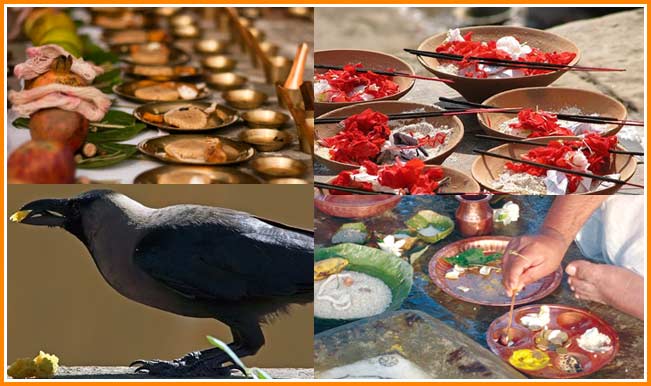
Mahalaya Paksha or Pitru Paksha is the 16 day period that falls in the second fortnight of the Hindu month of  Bhadrapada. It ends with Amavasya. Mahalaya Amavasya is also called Sarva Pitri Amavasya. Pitru or Pitris are our ancestors and these days are of paramount importance in offering prayers and food to them.

Our scriptures say we are all born with three kinds of debts:
1. The debt we owe to the Gods – this is repaid by performing Yagyas
2. The debt we owe to the Rishis (Seers/Sages) – this is repaid by study of the scriptures
3. The debt we owe to our ancestors – this is repaid by performing Shraddha and Tarpan  for the deceased

Karna, the great warrior, of the Mahabharata was the son of Suryadev and known for his charity. When he died and went to heaven he found he was only able to get food made of gold which was of no use in satiating his hunger. When he asked the Gods why, Indra told him that this was because throughout his mortal life Karna had only donated gold and gems to the poor but never food and water to them or to his ancestors. Karna realized his mistake and the Gods agreed to let him go back to Earth for a short period to make amends. He fed the poor and needy during this time and this period came to be known as pitru paksha. It is worth noting that in the divine system only pitrus are given 16 days – even Divine Mother gets 9 nights and Lord Ganesh gets 10 days.

During Pitru paksha we make offerings for the satisfaction (tushti), strength (pushti) and liberation (mukti) of our pitrus. Tarpan of water, milk etc, feeds them, recitation of powerful mantras, like any of  the Mahavidya mantras,  Durga saptashati etc, strengthens them and recitation of Bhagwat Katha, Bhagavat Gita, Guru Gita etc. helps liberate them. Additionally acts of charity in their name like feeding others, giving clothes etc. adds to their good karma.

Our elders and especially our parents have made immense sacrifices in bringing us up. Without the generations of ancestors that came before us, we would not exist here and without their contribution we would not have all the things that we have today. It is a known fact that the thoughts and beliefs of a mother influences the thoughts and beliefs of the child while it is in her womb. In fact the good and bad deeds of the family lineage influences all born in the lineage and we take on some of the negative karma of the mistakes of past generations in this life, causing us to experience suffering too.


After leaving the physical body many souls still have a lot of unfulfilled desires and suffer due to this. Pitra Dosh (problems in life due to unhappy ancestors) is indicated by the placement of planets in specific houses in the natal horoscope. This arises when pitrus in the lineage had died due to unnatural causes like snake bite, drowning, in an accident etc., or because they have been wronged by acts like wrongful appropriation of property, injustice meted out towards parents, siblings or others in the family, neglect, abuse or killing of members in the family etc. In these instances the pitrus are not able to move to higher planes and remain here or in lower planes undergoing a lot of suffering. They look towards their offspring lineage to do spiritual work that helps them. There can never be any happiness or progress in families when pitra dosha is present. Dreaming of snakes or of drowning, facing repeated miscarriages, continuous fights and arguments amongst family members, broken marriages, incurable diseases affecting family members, or illness that cannot be diagnosed are all symptoms of pitru dosha impacting the family lineage.

Pitra Dosha can be alleviated to an extent by regularly performing shraadha, tarpan, daan etc. for the pitrus throughout the year on all appropriate occasions. Additionally special prayog’s (spiritual practices) using mantra, yantra and tantra on special days in special teertha (holy) places can be very fruitful in addressing pitra dosha. One off the most effective methods of addressing pitra dosha is the prayog of Ma Bagalamukhi (the eighth Mahavidya) with her mantras on an Amavasya that falls on Saturday.

Our pitrus in various subtle astral bodies reside in the world called Bhuva and enjoy or suffer based on the karma they have incurred from deeds in past lifetimes. Offerings made to them reach them in whatever subtle body they exist through the pitru devas and help alleviate any sufferings they may be undergoing as well as help them ascend to higher worlds. They in turn bless us and we progress and prosper.

During Mahalaya paksha we honor individual ancestors with special offerings and rites performed to each ancestor depending on the thithi (date) when they died. The Shraddha ceremony can be performed to all pitrus on the Mahalaya Amavasya day irrespective on when they died and also to compensate if we could not perform the rites on their annual death day.

Wednesday, September 19, 2018

The True Meaning of celebrating Ganesh Chaturthi and pleasing Ganesh


(based on the Pravachan of Gurudev Swami Divyachetnanandji Maharaj)


Ganesh is the head of all the deities. We recite “Ganaanaam cha Ganapati …” - Gana means group, Pati means head – Ganapati is the head of all. He represents the Earth element which is why he is so heavy. He is the most intelligent and if you read about him in the scriptures this has been demonstrated through many stories about him.

Currently the ten days of Ganesh are ongoing. Most of us have made/bought a clay idol of Ganesh and worshiped him, and have/will immerse this idol in water (visarjan). But that is not what Ganesh worship and pleasing him is all about. We need to try to understand what Ganesh represents, what we need from him and what we should take from him during these days.

This body is a temple. All the deities reside in it. What is outside is also inside. Ganesh resides at the Muladhara chakra. Mula means base, so Ganesh is the base. Ganesh got blessings from all the Gods that he would be the first one to be prayed too. He is “pratham pujya”. If we have his blessings, if we imbibe his qualities we will be first and foremost too. We should strive to be like him.

Ganesh has two wives – Riddhi and Siddhi. He has two sons – Shubha and Labha. His sons are said to be very young. Mothers are always present where their young children are. If we honor Shubha and Labha then their Mothers will automatically be there for us too.

What is Shubha? Doing all virtuous deeds is called Shubha. Not harming anybody may be good karma but it is not a shubha karma. Shubha karma is doing good to others. Doing karma that will benefit others. Charity comes from this. Doing more and more for others without any ego; that is, not doing charity with an expectation to receive praise. It is said about daan (charity) that when you give something others should not know. Even your own left hand should not know that your right hand gave. This is true charity. When we do more and more good karma like being with Guru, listening to pravachans, understanding them, practicing what was taught, experiencing the benefits of the teachings and then in turn spreading the teachings to others, it is shubha karma. If we change the lives of a hundred people for the better it is shubha karma. Our life on Earth has been useful.

If we have done a lot of shubha karma, labha automatically comes to us. Labha means gains. Gaining more and more. As an example, if we know exactly how much wealth we have it means that we don’t have enough. When we have so much wealth that we can’t even keep count of it and still more and more keeps pouring in, we are indeed wealthy. Wealth is not just money, it is all good things. Labha means countless blessings keep coming our way. Infinite kinds of Lakshmi always come to us when we do Shubha. Bliss is always there.

Riddhi is prosperity/wealth/good fortune and Siddhi is special spiritual powers. When Shubha and Labha are with us automatically Riddhi and Siddhi are with us too. When all these four are there then Ganesh is there. Ganesh represent Swastik – these four – the entire family inside. Swasth is kalyan. All these are hidden inside Ganesh only.

But the key to having Ganesh with us always is based only and only upon the shubha karma we have done and are doing. Keep doing shubha karma always and Ganesh will always be with you.  And the origin of all shubha karma begins with respecting one’s own parents. Because our origin starts from our parents. Respect parents do shubha karma and be always with Ganesh.

This is the true meaning of celebrating Ganesh.

Jai Ganesh

Jai Gurudev

Monday, August 27, 2018

The Bhagavad Gita and its relevance in todays world


( based on the pravachans of Gurudev Swami Divyachetnanandji Maharaj)                       

   ॐ परम् तत्त्वाय नारायणाय गुरुभ्यो नमः  


The Bhagavad Gita starts with the words “Dharma Kshetre Kuru Kshetre”.  Kshetra means a place and kuru means doing. The Bhagavad Gita was set in the place where actions were done for Dharma. What is Dharma? “Dhaarayati Sa Dharma – that which is worth adopting is Dharma”, or, in other words that concept, by adopting which, we become one with God is Dharma.


In real life, we are all constantly fighting the Mahabharat. This war is being fought within us. Both the daivi (divine) forces and the aasuri (evil) forces are battling within us and the Kurukshetra is our mind.  The truth is we look for enemies outside, but most of our enemies are within. We fight with laziness, lethargy, procrastination, jealousy, anger, hatred, intolerance, prejudice, fear, selfishness etc. All these enemies hold back our progress, totally destroying our peace of mind and preventing us from leading a perfect life.


The last line of the Bhagavad Gita is :


“Yatra Yogeshwara Krishna, 
Yatra Paartho Dhanur Dhara, 
Tatra Shrir-Vijayo Bhootir
 Dhruva Neetir Matir Mama” 
  • Here Krishna is being referred to as Yogeshwar. Yogeshwar, or ishwara of yoga, is Shiva. This line means wherever Krishna is present in his Yogeshwar or Shiva like form, controlling all his senses, and ready to work for the welfare of all. This is the real meaning of a Yogi. 
  • Arjun is called Parth. Parth means pritha putra. Pritha or related to the Earth, putra or son. Dhanurdhar means one who is holding the bow in his hand. Arjuna has lifted up his bow ready to let pull the string and launch the arrows. He is poised and ready to battle. Just before this he had said to Krishna” O Lord, I will do as you bid me to”. 
  • Vijay means Victory,  Shree means, wealth and opulence, Neeti means righteous behavior, Bhooti means exceptional power, Dhruva Matir Mama means this is my strong opinion.

A simple translation is - where Lord Krishna, in his Yogeswar form and Arjun as Parth, armed and poised for battle are present, there will certainly be opulence, victory, prosperity, exceptional power and righteousness. This is my opinion.

In other words, when we have controlled our minds and senses and are armed and ready to fight for dharma there will always be opulence, victory, prosperity, exceptional power and righteousness for us.

The Bhagavad Gita is not an epic poem or a story from the past. It is all about dharma, the conflict around dharma, the dilemma and the personal choices one faces. Therefore its teachings are relevant today, tomorrow and will remain relevant in all the centuries to come.  


Jai Gurudev
Jai Shri Krishna


Friday, November 15, 2013

BEGINNERS GUIDE TO TANTRIK SADHANA

I've been fortunate to be born in family where Pure Tantra was taught to me from childhood.
In my association with Guruji, I also met different types of people who come to Guruji for personal and spiritual guidance. For all there problems or curiosities the only prescriptions would be " sadhana". For newcomers it would appear very confusing and then would turn to me with various questions. Based on all these commonly asked question I ve tried to prepare this FAQs.,.Hope it is helpful to the readers.

Q.) What is Tantra?
 Tantra in one single word means " The Technique"

Q.)What is Sadhana?

Sadhana is a ritualistic meditational practice which may include yogic postures, pranayams, chantings, visualization techniques etc., It is done under the guidance of the Spiritual Master.
The goal of Sadhana is to awaken the dormant spiritual energy which helps us fight all obstacles in material and spiritual path and take us to the path of immortality.

Q.) What is Anusthan?
 Anusthan means chanting mantras for specific no. of times in a specific time period followed by other procedures like fire sacrifice(homam), water offerings tarpanam and cleansing of self by sprinkling water on crown of head known as marjanam.
For most mantras the common anusthan is to chant it 125,000 times., and do the homan for1/10th of the no. chantings and then 1/10th for tarpanam and 1/10th for marjanam
For example:
If we do Anusthan of 125,000 times of chanting then,  
Homam will 12,500 times chanting (125,000 x1/10)
Tarpanam will be 125 times chanting of homam (1250 x 1/10)
Marjanam is 12.5 times of tarpanam                   (125 x 1/10)

Q. ) If we are not able to undertake any anusthan then is there any other way?
Yes, you can hire a priest to do the anusthan for you.
Or, You can contact www.Divyachetna.com. The Ashram has professional expert priests who undertake anusthans on your behalf.

To be continued....


The Manifestation of Ten Mahavidyas : A story from the Devi Purana.


(The following article has been translated from the book ‘Baglamukhi-ek durlabha sadhana paddhati” by Swami Divya Chetnananda.)

The Primordial Divine Energy, who is The Cosmic Mother, known as Adishakti Bhagawati Jagadamba, is present everywhere in the form of ‘Knowledge’ as well as ‘Ignorance’. 

Living beings are bound eternally because of ‘Ignorance’, whereas ‘Knowledge’ becomes their source of Liberation. While Bhagwati Jagadamba manifests herself as ‘Knowledge and Ignorance’, Lord Shiva is reputed to be present as ‘Master of Knowledge’. At other places, these Forms are also known and worshipped as Navadurga, Chaamunda and Vishnu priya.

Why did the Mahavidyas appear and how did they take form? To briefly describe the reason, we have to refer to the incident described in the Devi Purana that explains this topic. 

Long time ago in the Vedic age, Prajapati Daksha, the son of Brahma the Creator, organized a fire sacrifice, or Yagna, and invited all the Gods, Demigods, and Sages to this grand event. Daksha had feeling of animosity towards Lord Shiva, and therefore intentionally, he did not invite to this Yagna, Lord Shiva and  His own daughter who also happenend to be Shiva’s spouse known as Devi Sati.The great sage Devarishi Narada met Devi Sati and told her that all her sisters will be attending the yagna therefore, it would be a good reason for her to attend the yagna too. Devi Sati, even though uninvited in the yagna, thought for a while, and then decided to attend the event against Her husband, Lord Shiva’s wishes.

She tried taking permission from Him to attend the event, but Lord Shiva explained to her that it would not be the right thing to do. Devi Sati became adamant and said that she will definitely go to Daksha’s yagna and will take the offerings that lawfully belonged to Shiva, and if this did not happen, then she will destroy the yagna.

Saying this, Devi Sati’s anger reached its peak, Her eyes became red, Her lips started fluttering, and Her complexion turned blue. Alighted by the fire of anger, She became wrathful and terribly ferocious. Her body emitted light like a red-hot fireball, and the heat of this fire deteriorated Her body to appear like an old woman. Her hair was disheveled and She was ready to fight with her four arms.

Like a fire, which could destroy the world, Devi appeared, wearing a garland of human skulls and her tongue rolling out. A crescent moon bedecked her forehead, and her entire form looked horrifying. She was making a loud roaring sound of “hum hum”. Illuminated by the blazing anger, emitting from her body that made her look scary and violent, the Great Devi laughed loudly and stood in front of Lord Shiva. This horrifying and wrathful form of Devi was unbearable to see, even by Lord Shiva.

Horrified, Lord Shiva lost his composure and not knowing what to do, He started running helter-skelter. Seeing this, Devi said, “ Don’t fear! Don’t fear!” Even this could not stop Shiva. Finally, to stop Her Husband from going into a frenzy, Devi divided herself in to ten different forms and She spread in all the ten directions. Whichever direction Lord Shiva would run, Devi would appear in one of her ten forms, in that direction, and stop Him from running further.

These ten forms of Devi are known as the Ten Mahavidyas. Their names are Kali, Tara, Tripura Sundari, Bhuvaneshwari, Tripura Bhairavi, Chinnamasta, Dhumavati, Baglamukhi, Matangi and Kamala. On seeing them, Lord Shiva desired to know about these newly manifested forms of Devi. Devi then gave the following description:


“The Form of Devi with dark complexion and scary eyes, who is standing is in front of You (Shiva) is Bhagavati Kali,  (literally meaning “The Ignorance Remover”).

The Form of Devi with bluish complexion, who is standing above you, is the direct expansion of ‘Mahakaal’, or The Great Time, and She is known as Mahavidya Tara, (literally meaning “The Giver of Liberation”).

O Most Honorable Shiva! The Form of Devi, standing to your right side, who appears having her head chopped off, is none other than Mahavidya Chinnamasta, (literally meaning “The Slayer of Ego ”).

O Benevolent Sambho! The Form of Devi towards your left side, is known as Bhagavati Bhuvaneshwari, (literally meaning “The Supreme Mistress of the World”).

O Lord of all Gods, Mahadeva! The Form of Devi standing behind You is the slayer of enemies known as Baglamukhi (literally meaning “One who Paralyzes Enemies”).

The Form of Devi who appears like a widow, who is standing in the southeast direction, is known as Dhumavati, (literally meaning “One who presides over Negativity”).

O Mahadeva Shiva! The Form of Devi, who has manifested in the southwest direction, is known as “Tripura Sundari”  (literally meaning  “The Most Beautiful in the three Worlds”).

The Form of Devi, who has appeared in the northwest direction, is the daughter of Sage Matang, and she is known as Matangi. (Literally meaning “The Remover of Inauspiciousness”).

The Form of Devi situated in the northeast direction is known as Maheshwari Kamala, (literally meaning “The Giver of Prosperity”).

And, I am the Most Fearsome Tripura Bhairavi, (literally meaning “The Creator, Sustainer and Destroyer of the Three Worlds”).

O Sambho! Please do not fear. These divine forms of Devi are the most superior forms of The Cosmic Feminine Energy. Those devotees who regularly worship these Devis with faith and devotion, will get there desires fulfilled and above all, these Devis also fulfill the four goals of human life called ‘Purusha artha’, namely, Righteousness, Desires, Wealth and Liberation. “